


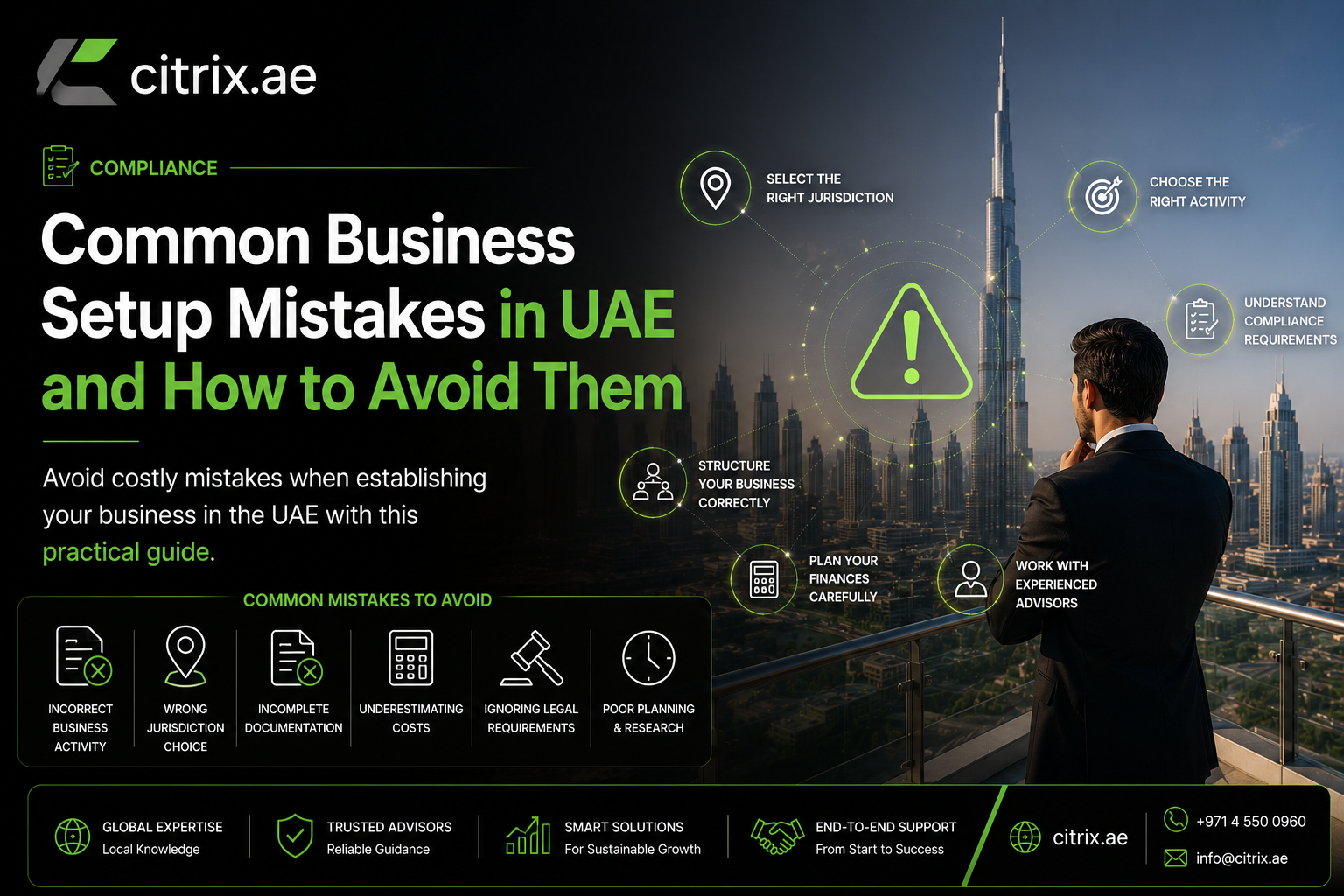
Avoid costly business setup mistakes in the UAE. Learn the most common errors entrepreneurs make and how to establish your company successfully.
Common Business Setup Mistakes in UAE and How to Avoid Them
The United Arab Emirates remains one of the world’s most attractive destinations for entrepreneurs, investors, and international businesses. With its strategic location, modern infrastructure, and business-friendly environment, the UAE offers significant opportunities for growth.
However, many entrepreneurs make avoidable mistakes during the company formation process that can lead to delays, unexpected costs, compliance issues, and operational challenges.
Understanding these common business setup mistakes can help ensure a smoother and more successful launch.
Why Proper Business Setup Matters
Starting a business involves more than simply obtaining a license. The decisions made during the setup stage can impact future operations, compliance requirements, expansion opportunities, and profitability.
A well-planned setup helps businesses:
- Avoid regulatory issues
- Reduce unnecessary expenses
- Accelerate business operations
- Improve scalability
- Ensure long-term compliance
Proper planning from the beginning can save both time and money.
Mistake #1: Choosing the Wrong Business Activity
One of the most common mistakes entrepreneurs make is selecting an inappropriate business activity.
The business activity determines:
- License requirements
- Regulatory approvals
- Operational permissions
- Compliance obligations
Choosing the wrong activity may limit future operations or require costly amendments later.
How to Avoid It
Carefully review your planned services and future business objectives before selecting a business activity.
Consider:
- Current services
- Future expansion plans
- Industry regulations
- Licensing requirements
Selecting the right activity from the start creates greater flexibility for growth.
Mistake #2: Choosing the Wrong Business Jurisdiction
Many entrepreneurs rush into company formation without fully understanding the differences between mainland and free zone structures.
Each jurisdiction offers unique benefits and limitations.
An incorrect choice can affect:
- Market access
- Operational flexibility
- Expansion opportunities
- Long-term costs
How to Avoid It
Evaluate your:
- Target customers
- Business model
- Growth strategy
- Operational requirements
Understanding your business goals will help determine the most suitable setup structure.
Mistake #3: Underestimating Setup Costs
Many new business owners focus solely on licensing fees while overlooking other expenses.
Potential costs may include:
- Government fees
- Office space
- Visa processing
- Administrative services
- Professional consultations
- Compliance requirements
Unexpected expenses can strain cash flow during the early stages of operation.
How to Avoid It
Prepare a comprehensive budget that includes both setup and ongoing operational costs.
Allow room for contingencies and future growth requirements.
Mistake #4: Ignoring Compliance Requirements
Compliance obligations do not end after receiving a business license.
Businesses must continue meeting regulatory requirements throughout their operations.
Common compliance areas include:
- Corporate tax obligations
- Record keeping
- License renewals
- Regulatory filings
- Employee documentation
Failure to comply may result in penalties or operational disruptions.
How to Avoid It
Develop a compliance management process and maintain awareness of relevant regulations affecting your industry.
Regular reviews can help ensure ongoing compliance.
Mistake #5: Inadequate Financial Planning
Some entrepreneurs launch businesses without a clear financial strategy.
This often leads to:
- Cash flow problems
- Delayed growth
- Difficulty securing funding
- Operational instability
How to Avoid It
Create a realistic financial plan that includes:
- Startup costs
- Operating expenses
- Revenue projections
- Emergency reserves
- Growth investments
Strong financial planning supports sustainable business development.
Mistake #6: Choosing Office Space Too Quickly
Office requirements vary significantly depending on business activities and operational needs.
Some businesses lease more space than necessary, while others choose facilities that limit future expansion.
How to Avoid It
Evaluate:
- Team size
- Growth projections
- Budget considerations
- Licensing requirements
Flexible office solutions may provide greater efficiency during the startup phase.
Mistake #7: Failing to Research the Market
Even in a strong economy, not every business idea will succeed.
Many entrepreneurs enter the market without properly analyzing:
- Customer demand
- Industry trends
- Competitor activity
- Pricing strategies
How to Avoid It
Conduct thorough market research before launching.
Understand:
- Customer pain points
- Market gaps
- Competitive advantages
- Industry opportunities
Businesses that solve real problems are more likely to achieve long-term success.
Mistake #8: Neglecting Digital Presence
Today’s customers expect businesses to have a professional online presence.
Companies without digital visibility often struggle to build credibility and attract customers.
How to Avoid It
Develop a strong digital foundation that includes:
- Professional website
- Search engine optimization (SEO)
- Social media presence
- Business listings
- Content marketing
Digital visibility helps businesses compete effectively in modern markets.
Mistake #9: Delaying Business Banking Preparation
Some entrepreneurs assume that opening a corporate bank account is a simple administrative task.
However, preparation and documentation requirements can vary depending on business activities and banking policies.
How to Avoid It
Prepare required documentation early and maintain organized company records.
This can help streamline the banking process and avoid delays.
Mistake #10: Trying to Handle Everything Alone
Many entrepreneurs attempt to manage company formation, compliance, accounting, and operations without professional assistance.
This often increases the risk of costly mistakes.
How to Avoid It
Seek guidance from qualified professionals when needed.
Expert support can help:
- Simplify setup procedures
- Improve compliance
- Reduce administrative burdens
- Support long-term growth planning
Professional advice often saves time and resources.
Warning Signs Your Setup Strategy Needs Review
You may need to reassess your business setup if:
- Expansion plans feel restricted
- Licensing limitations affect operations
- Compliance obligations become confusing
- Operational costs are higher than expected
- Market opportunities are difficult to pursue
Periodic reviews help ensure your business structure continues supporting growth.
Best Practices for Successful Business Setup in UAE
To maximize your chances of success:
Define Clear Business Goals
Establish both short-term and long-term objectives.
Understand Regulatory Requirements
Research applicable rules before making commitments.
Plan for Future Growth
Choose structures that support expansion.
Invest in Professional Advice
Guidance from experienced consultants can reduce risk.
Maintain Compliance
Stay informed about regulatory updates and filing requirements.
Build a Strong Financial Foundation
Monitor expenses and manage cash flow carefully.
Final Thoughts
Starting a business in the UAE offers tremendous opportunities, but success begins with making informed decisions during the setup process.
By avoiding common business setup mistakes such as choosing the wrong business activity, underestimating costs, neglecting compliance requirements, and failing to plan strategically, entrepreneurs can create a stronger foundation for sustainable growth.
Careful preparation, market research, financial planning, and ongoing compliance will help position your business for long-term success in the UAE’s competitive and dynamic business environment.
