

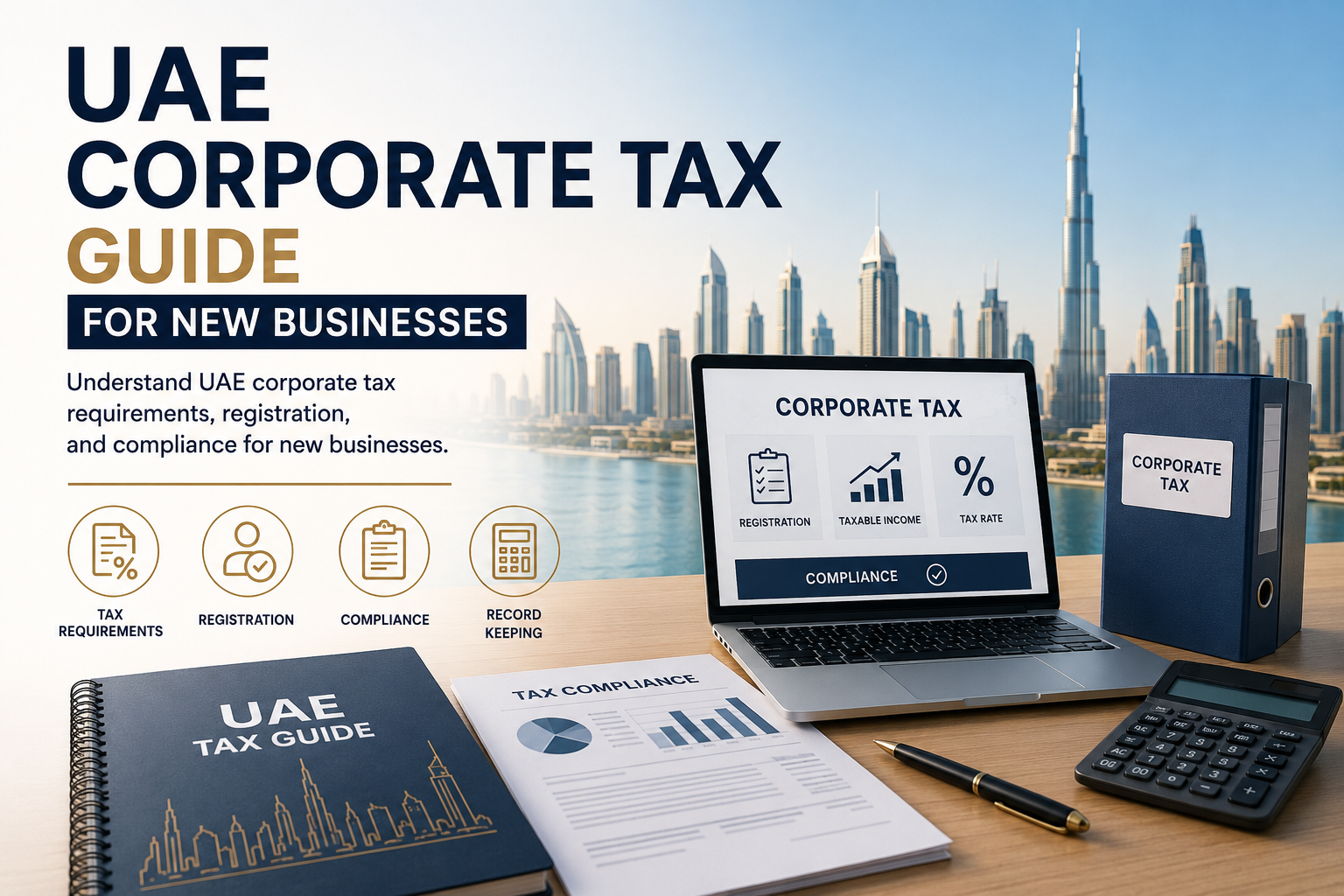
Learn about UAE corporate tax requirements, registration procedures, compliance obligations, and key considerations for new businesses operating in the UAE.
The United Arab Emirates has long been known as a business-friendly destination for entrepreneurs, startups, and international investors. As the country’s business landscape continues to evolve, understanding corporate tax requirements has become an essential part of operating a company in the UAE.
Whether you are launching a startup, establishing a consulting firm, or expanding an international business, understanding UAE corporate tax regulations can help you maintain compliance and avoid unnecessary penalties.
What Is UAE Corporate Tax?
Corporate tax is a direct tax imposed on the net profits of businesses operating in the UAE. The introduction of corporate tax aligns the UAE with international tax standards while maintaining a competitive environment for businesses and investors.
Corporate tax applies to certain business profits and is administered by the UAE’s federal tax authorities.
The objective is to support economic growth, increase transparency, and strengthen the country’s position as a leading global business hub.
Who Needs to Register for Corporate Tax?
Most businesses operating in the UAE are required to assess whether they must register for corporate tax.
Businesses that may be required to register include:
- Mainland companies
- Free zone companies
- Limited liability companies (LLCs)
- Professional service providers
- Trading businesses
- E-commerce companies
- Branches of foreign companies
Registration requirements may vary depending on the business structure, activities, and applicable regulations.
Business owners should review their obligations carefully to determine whether registration is required.
Understanding Taxable Income
Taxable income generally refers to the profits generated by a business after deducting allowable expenses and adjustments.
Examples of factors that may affect taxable income include:
- Business revenue
- Operating expenses
- Employee costs
- Depreciation of assets
- Financial adjustments
- Certain exempt income categories
Maintaining accurate accounting records is essential for calculating taxable income correctly.
Corporate Tax Registration Process
New businesses should ensure they complete registration requirements within the applicable deadlines.
The registration process typically involves:
1. Gathering Company Information
Businesses may need to prepare:
- Trade license details
- Company registration documents
- Shareholder information
- Contact information
- Authorized signatory details
2. Creating a Tax Account
Businesses generally create an online account through the relevant tax authority’s platform to manage tax-related obligations.
3. Submitting Registration Details
Required information is submitted electronically for review and approval.
4. Receiving Tax Registration Confirmation
Once approved, businesses receive confirmation of their registration and can proceed with ongoing compliance obligations.
Record-Keeping Requirements
One of the most important aspects of corporate tax compliance is maintaining proper financial records.
Businesses should keep:
- Financial statements
- Sales invoices
- Purchase records
- Expense documentation
- Bank statements
- Payroll records
- Contracts and agreements
Good record-keeping practices help support tax filings and simplify audits or compliance reviews.
Filing Corporate Tax Returns
Registered businesses are generally required to submit corporate tax returns according to applicable deadlines.
Tax returns typically include:
- Revenue information
- Business expenses
- Taxable profit calculations
- Supporting financial information
Accurate reporting helps businesses remain compliant and avoid penalties related to incorrect or late submissions.
Free Zone Businesses and Corporate Tax
Many entrepreneurs choose UAE free zones because of their business-friendly environment and operational advantages.
However, free zone companies should not assume they are automatically exempt from all tax-related obligations.
Free zone businesses should carefully review the rules that apply to their activities, customers, and income sources to determine their compliance requirements.
Professional tax advice may be beneficial when evaluating eligibility for specific tax treatments.
Common Corporate Tax Compliance Mistakes
New business owners often make avoidable mistakes that can lead to compliance issues.
Some common examples include:
Poor Record Keeping
Missing invoices or incomplete financial records can create challenges during tax reporting.
Missing Registration Deadlines
Failing to register on time may result in penalties or administrative complications.
Incorrect Financial Reporting
Errors in revenue or expense reporting can lead to inaccurate tax calculations.
Mixing Personal and Business Finances
Maintaining separate financial accounts helps improve accounting accuracy and transparency.
Ignoring Professional Advice
Complex business structures may require guidance from qualified accountants or tax professionals.
Best Practices for New Businesses
To simplify corporate tax compliance, consider the following best practices:
- Maintain organized accounting records
- Use accounting software to track transactions
- Reconcile bank accounts regularly
- Keep supporting documentation for expenses
- Monitor regulatory updates
- Consult tax professionals when needed
- Prepare financial reports consistently throughout the year
Proactive financial management can reduce compliance risks and support long-term business growth.
Why Corporate Tax Compliance Matters
Corporate tax compliance is more than a legal requirement. It helps businesses demonstrate transparency, build credibility with financial institutions, and maintain strong relationships with regulators and stakeholders.
Businesses that prioritize compliance are often better positioned for expansion, investment opportunities, and sustainable growth.
Final Thoughts
Understanding UAE corporate tax requirements is an important step for every new business. From registration and record-keeping to tax return filing and ongoing compliance, businesses should develop clear financial processes from the beginning.
By staying informed, maintaining accurate records, and following regulatory requirements, entrepreneurs can focus on growing their businesses while confidently meeting their corporate tax obligations in the UAE.
